
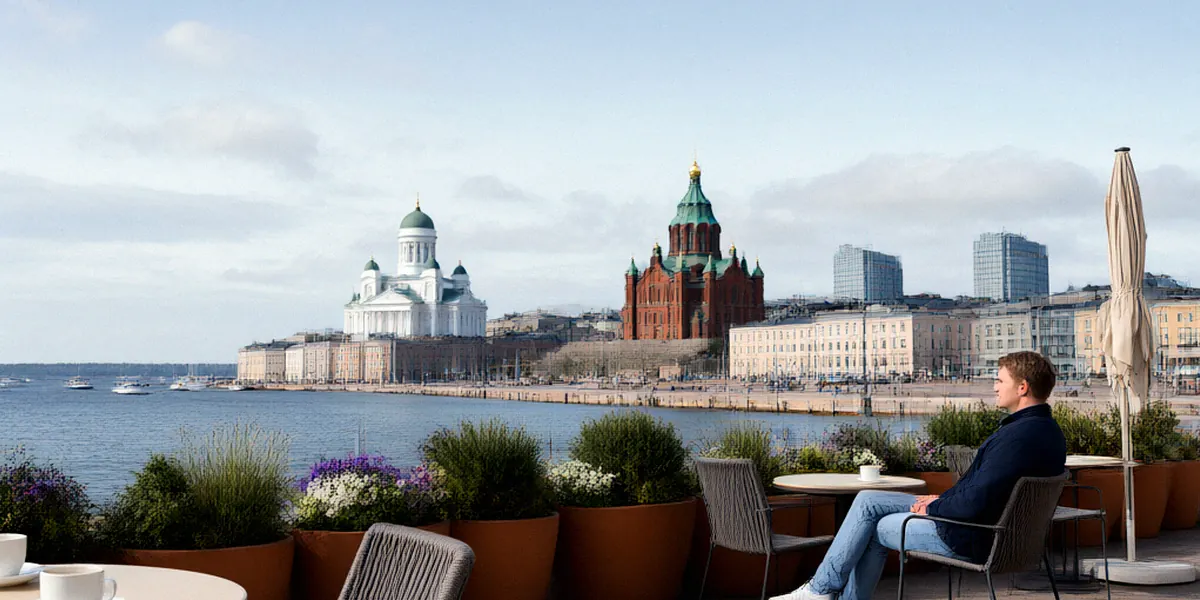
Kempsinki: Helsinki & Nordic City Breaks for Australian Travellers
Picture this: it’s a 38-degree Saturday in January, and you’re slapping on sunscreen at Bondi, dodging seagulls and fighting for a patch of sand the size of a beach towel. Now picture the opposite — a city where the sea freezes solid, where locals strip off in -10°C to plunge into an ice hole after a 90-degree sauna, and where the winter light is so soft and blue it looks like someone applied a filter to reality. That’s Helsinki. And honestly? That contrast is exactly why our team traded Bondi for the Baltic. We’re a bunch of Australians who fell hard for Finland — the design, the sauna culture, the ferries to everywhere, the silence of a snow-covered island twenty minutes from the city centre. Kempsinki exists because we kept getting the same questions from mates back home: Is Helsinki worth it? How do you get there from Australia? What actually happens in a Finnish sauna? This guide is our long-form answer — everything we wish we’d known before our first Nordic winter, written for Australians, by Australians who’ve done the long haul more times than we’d like to admit.
Why Helsinki Should Be Your Next Nordic City Break
Helsinki doesn’t shout. It’s not Paris, it’s not Rome, and it doesn’t try to be. What it does instead is quietly get under your skin. It’s a city of roughly 650,000 people — small enough to walk end to end in an afternoon, sophisticated enough to keep you fed, caffeinated and culturally satisfied for a week. For Australians used to sprawling capitals where a “quick trip into town” eats three hours, Helsinki’s compact centre feels almost absurdly convenient. You step off the airport train at Central Station, walk ten minutes, and you’re standing in front of a white cathedral that looks like it was carved from icing sugar.
The case for Helsinki as your next city break comes down to a few things. First, it’s genuinely underrated — most Australians we talk to have Stockholm or Copenhagen on their radar, but Helsinki sits quietly to the side, which means fewer crowds, cheaper accommodation in shoulder season, and a more authentic feel. Second, it’s a design powerhouse: the Design District, spread across the Punavuori, Kaartinkaupunki and Ullanlinna neighbourhoods, is packed with studios, vintage shops, ceramics and furniture showrooms that make even non-design people start eyeing off a $400 lamp. Third, it’s a gateway. From Helsinki you can be in Tallinn in two hours, Stockholm overnight, or deep in the Finnish archipelago by lunchtime.
Must-sees? Start with Senate Square, the neoclassical heart of the city, dominated by Helsinki Cathedral and surrounded by the Government Palace and university buildings. It’s the postcard shot, and it’s genuinely impressive in person — especially in winter when snow dusts the steps and the whole square glows under floodlights. Then wander south through Esplanadi park, grab a coffee (Finns drink more coffee per capita than almost anyone on earth), and disappear into the Design District for an afternoon. Add in the Temppeliaukio Rock Church, carved directly into granite, and the Suomenlinna sea fortress — a UNESCO site reachable by a 15-minute public ferry on the same ticket as a normal transport fare — and you’ve got a city break that punches well above its weight.
And here’s the thing Australians don’t always realise: Helsinki is easy to reach. Really. It’s not some obscure Arctic outpost requiring four connections and a dogsled.
How to Get to Helsinki from Australia (Finnair, Qantas, Singapore Airlines)
This is the question we get most, so let’s be clear: Finnair operates direct flights from Australia to Helsinki via Singapore or Bangkok, with flights departing from Sydney, Melbourne, and Perth. That’s the headline fact. In practice, it means you’re looking at one stop, not three, which is a game-changer for the long haul from Oz.
The routing typically works like this: you fly from your Australian city to Singapore or Bangkok (7–9 hours depending on origin), have a layover of a couple of hours, then continue on Finnair’s Airbus A350 to Helsinki — around 11–12 hours from Singapore, slightly longer from Bangkok. Total door-to-door is usually 20–24 hours, which sounds brutal but is honestly about as good as it gets when you’re travelling from the bottom of the world to the top of it.
Qantas and Singapore Airlines also get you there, usually via Singapore, though you’ll typically connect onto a partner carrier for the final leg into Helsinki. If you’re chasing points or status, it’s worth checking which alliance routing suits you best — Finnair is part of oneworld, which pairs nicely with Qantas Frequent Flyer.
Our tips for the booking process:
- Book early for summer. June to August is peak season, and fares from Australia spike accordingly. Booking 4–6 months out usually saves several hundred dollars.
- Consider a stopover. Singapore and Bangkok are both excellent places to break the journey for a night or two. A 24-hour stopover in Singapore can turn a punishing long haul into two manageable flights.
- Watch for winter deals. January and February are cold but often cheaper, and the snow transforms the city into something genuinely magical.
- Check Perth routings. Perth travellers sometimes get slightly different schedules, so compare departures from all three east-coast-plus-west gateways before locking in.
Helsinki vs Stockholm vs Copenhagen: Which Nordic City Is Right for You?
We love all three, but they’re genuinely different cities with different vibes. Here’s our honest breakdown for Australians trying to choose.
Helsinki is the quiet achiever. It’s the most affordable of the three (though “affordable” is relative in the Nordics), the most walkable, and the most distinctive culturally — Finnish is a language unlike anything else in Europe, the sauna culture is unmatched, and the proximity to Tallinn and the Baltic gives it a gateway feel. It’s also the easiest to reach from Australia thanks to Finnair’s one-stop routing. If you want design, saunas, and a city that feels genuinely foreign without being overwhelming, Helsinki is your pick.
Stockholm is the glamorous one. Spread across 14 islands, it’s beautiful in a postcard way — Gamla Stan’s cobbled lanes, the Vasa Museum, the archipelago on its doorstep. It’s bigger than Helsinki, more expensive, and has a slightly more “international capital” energy. Great for shopping, museums, and a classic Scandinavian experience.
Copenhagen is the foodie’s choice. Noma put it on the map, but the whole city is now a dining destination, plus it’s the most bike-friendly place on earth and has that effortless Danish cool. It’s also the easiest to combine with Malmö in Sweden via the Öresund Bridge — a cross-border city break in itself.
If you’ve got a week and want to combine two, Helsinki + Stockholm is our favourite pairing (more on that below). If you want one city done properly, pick based on your priorities: culture and sauna (Helsinki), beauty and islands (Stockholm), food and cycling (Copenhagen).
Best Time to Visit Helsinki: Summer White Nights vs Winter Magic
This is genuinely a coin-flip decision, and it depends entirely on what kind of traveller you are.
Summer (June–August) brings the White Nights — in late June, Helsinki gets around 19 hours of daylight, and the sky never fully goes dark. Locals spill onto terraces, the archipelago comes alive, and there’s a festival almost every weekend. It’s the easiest introduction to Finland for a first-timer, and the weather is genuinely pleasant (think low-to-mid 20s, occasionally warmer). The downside: it’s peak season, prices are highest, and the city is at its busiest.
Winter (December–February) is the opposite experience entirely. Daylight shrinks to around 6 hours in December, temperatures drop to -10°C or lower, and snow blankets everything. It’s dark, it’s cold, and it’s absolutely magical. The Christmas markets, the frozen sea, the saunas, the Northern Lights if you head north — winter in Helsinki is a proper adventure. It’s also cheaper and quieter. You just need to pack properly (we’ll cover that below).
Shoulder season (May, September) is the sweet spot for many. Fewer crowds, reasonable prices, and decent weather — May brings spring blossoms and lengthening days, September offers crisp autumn colours and a mellow vibe.
Our verdict: if you’ve never done a Nordic winter before, start with summer. If you’re chasing the full Arctic experience and you’ve packed the right gear, winter will give you memories summer simply can’t.
The Ultimate Finnish Sauna Experience: Etiquette, Culture, and Where to Go
Finland has around 3.3 million saunas for a population of 5.5 million. That ratio tells you everything you need to know: sauna isn’t a spa treatment here, it’s a way of life. Finns sauna at home, at the cottage, at the office, at the gym, and in public saunas that range from sleek architectural statements to century-old wooden institutions. For Australians, the sauna is often a novelty — a hotel amenity or a post-gym recovery option. In Finland, it’s closer to a religion. It’s where business deals get done, where families catch up, where silence is comfortable and conversation is optional.
The ritual itself is simple: you heat the room (usually 70–90°C), you sit, you sweat, you cool off, you repeat. The cooling-off part is where it gets interesting — in summer that might mean jumping into a lake or the sea, and in winter it means rolling in snow or plunging into an ice hole cut through frozen water. That’s the avanto, and it’s the part that makes most Australians’ eyes go wide. We’ll get to it.
What makes Finnish sauna culture special isn’t the heat — it’s the rhythm. The alternating hot and cold, the slow build, the way your body recalibrates over an hour or two. Done properly, it’s less like a workout and more like a meditation. And once you’ve experienced it, hotel saunas back home never quite feel the same.
Sauna Etiquette 101: What Aussies Need to Know Before Stripping Off
Let’s address the elephant in the steam room: yes, you get naked. In traditional Finnish saunas — including public ones — swimwear is generally not worn. This is the part where Australians, raised on a mix of beach culture and puritanical awkwardness, tend to panic. Don’t. Finnish sauna nudity is completely non-sexual and utterly normal. Nobody is looking. Nobody cares. You’ll get over it in about ninety seconds.
That said, there are variations. Some public saunas, especially those catering to tourists, allow or require swimwear. Löyly, for example, has separate men’s and women’s saunas as well as a mixed sauna where swimwear is worn. Always check the specific rules before you go.
Here’s our practical etiquette guide:
- Shower before you enter. Always. There are showers in the changing rooms — use them.
- Sit on a towel or a sauna bench cover. Most places provide disposable seat covers or you bring your own small towel. This is a hygiene thing, and it’s non-negotiable.
- Don’t wear swimwear in traditional saunas unless the specific venue says otherwise. It’s considered unhygienic and a bit odd.
- Keep it quiet. Sauna is a contemplative space. Chat is fine, but loud conversations and phones are not. Leave the phone in the locker.
- Don’t overdo it. First-timers should start with 8–10 minutes, then cool off. Listen to your body. If you feel dizzy, get out.
- Hydrate. Drink water before and after. Alcohol and sauna don’t mix well, especially for beginners.
- Use the whisk (vihta/vasta) if offered. It’s a bundle of birch branches used to gently beat the skin — sounds odd, feels amazing, improves circulation.
- Cool off properly. Whether it’s a cold shower, a plunge pool, or an ice hole, the cold phase is half the experience. Don’t skip it.
The golden rule: follow what everyone else is doing. Finns are relaxed about sauna and will happily guide you if you’re unsure. Just don’t be the person who walks in with board shorts and a GoPro.
Löyly, Kotiharjun, and Allas Sea Pool: Our Favourite Helsinki Saunas
Helsinki has dozens of saunas, from ancient wood-fired institutions to sleek modern spaces. These are the three we keep coming back to.
Löyly is the showpiece — a striking contemporary building on the waterfront in Hernesaari, with a terrace that juts out over the Baltic. It’s a popular public sauna in Helsinki with a restaurant and terrace, and it’s the one we recommend to first-timers because it’s stylish, well-run, and easy to navigate. There are separate men’s and women’s saunas, a mixed sauna where you wear swimwear, and direct access to the sea for cooling off (or ice swimming in winter). The restaurant serves excellent Finnish food, and the terrace is one of the best spots in the city for a post-sauna beer in summer.
Kotiharjun Sauna is the opposite experience entirely — and we mean that as a compliment. It’s one of the oldest traditional saunas in Helsinki, operating since 1928 in the Kallio district, and it’s a proper old-school neighbourhood sauna. Wood-fired, no frills, separate men’s and women’s sections, and a clientele of locals who’ve been coming for decades. If you want to understand what sauna means to ordinary Finns — not tourists — this is the place. Bring cash, expect heat, and embrace the atmosphere.
Allas Sea Pool sits right on Market Square, next to the harbour, and combines saunas with outdoor pools filled with filtered Baltic seawater and (in winter) heated water. It’s more of a wellness complex than a traditional sauna, but the location is unbeatable and it’s a great introduction for families or anyone who wants a sauna-plus-swim experience without the full naked ritual. The views over the harbour are superb.
Other honourable mentions: Kulttuurisauna (a minimalist, architect-designed sauna in Merihaka), Hermanni Sauna (another traditional neighbourhood spot), and the saunas at the Yrjönkatu Swimming Hall (a gorgeous 1928 art deco bathhouse).
Ice Swimming and Avanto: Why You Should Try It (At Least Once)
We know how this sounds. “Jump into a hole in the ice? In Finland? In winter? On purpose?” Yes. And we’re going to convince you it’s one of the best things you’ll ever do.
Avanto is the Finnish word for the ice hole cut through frozen water, and ice swimming is exactly what it sounds like — lowering yourself into near-freezing water, ideally right after a hot sauna. The first ten seconds are shocking. Genuinely shocking. Your body screams at you. And then, somewhere around the fifteen-second mark, something shifts. The cold stops being painful and starts being electric. Your skin tingles, your mind goes completely blank, and when you climb out you feel more awake than you have in years.
The health claims around ice swimming are extensive — improved circulation, reduced inflammation, better mood, boosted immune function — and while the science is still catching up, the anecdotal evidence from Finns (and now from us) is overwhelming. The endorphin rush is real. The sense of accomplishment is real. And the bragging rights back home are unmatched.
How to do it safely:
- Always go after a sauna, never before. The sauna warms your core, which makes the cold plunge safer and more enjoyable.
- Don’t stay in long. Twenty to sixty seconds is plenty for beginners. Some experienced swimmers stay longer, but there’s no need to prove anything.
- Never go alone. Especially your first time. Go with locals, go with a group, or go to a supervised spot like Löyly or Allas Sea Pool where staff are on hand.
- Wear the right gear. A woolly hat, neoprene socks and gloves if you have them, and shoes you can slip on and off easily.
- Have a towel and warm clothes waiting. And a hot drink afterwards. Trust us.
- Skip it if you have heart conditions or are pregnant. Check with a doctor if you’re unsure.
If you’re in Helsinki in winter, the ice swimming spots at Löyly, Allas Sea Pool, and various spots around the archipelago are well set up for beginners. In summer, the same spots offer “just” cold sea swimming, which is a gentler introduction to the same principle. Either way — try it. At least once.
Baltic Travel Adventures: Day Trips and Ferry Routes from Helsinki
One of Helsinki’s best-kept advantages is its location. Sitting on the Gulf of Finland, it’s a natural gateway to the Baltic — and the ferry network is so good that day trips to other countries are genuinely easy. You can have breakfast in Helsinki, lunch in Tallinn, and be back for dinner. You can take an overnight cruise to Stockholm and wake up in a different capital. You can even (when routes allow) reach St. Petersburg. For Australians used to the tyranny of distance, this proximity to multiple countries is a revelation.
The ferries themselves are comfortable, affordable, and frequent. They’re not just transport — they’re part of the experience. Many have restaurants, bars, live music, and duty-free shopping. Some Australians we know have booked a Baltic ferry purely for the novelty of crossing an international border on a boat with a buffet.
Helsinki to Tallinn: The 2-Hour Ferry You Shouldn’t Miss
Tallink and Eckerö Line run frequent ferries between Helsinki and Tallinn, taking about 2 hours. That’s it. Two hours. You leave from Helsinki’s West Harbour or Katajanokka, and you arrive in Tallinn’s Old Town harbour in time for lunch. It’s one of the easiest international crossings in Europe, and Tallinn itself is a gem — a beautifully preserved medieval old town with cobbled streets, towers, churches, and a food scene that’s quietly excellent.
We recommend doing it as a day trip at minimum, but honestly, an overnight stay is better. Tallinn’s Old Town is magical in the evening when the tour groups leave, and the city has enough restaurants, bars, and museums to fill two or three days easily. Prices in Estonia are noticeably lower than Finland, which makes it a popular shopping and dining destination for Finns — and for Australians watching their budget, that’s welcome news.
Practical notes:
- Book online in advance for the best prices — walk-up fares are higher.
- Morning departures get you into Tallinn by mid-morning, giving you a full day.
- Bring your passport. Estonia is in the Schengen Area, but ID checks can occur.
- Consider the Tallink Shuttle for the fastest crossing, or the larger cruise ferries for a more relaxed experience.
- Eat in Tallinn. The food is excellent and cheaper than Helsinki — medieval-themed restaurants in the Old Town are touristy but fun, while the Telliskivi Creative City area offers more contemporary options.
Overnight Cruise to Stockholm: A Mini Nordic Break Within a Break
If you’ve got a spare night, the overnight ferry from Helsinki to Stockholm is one of the great Baltic experiences. Viking Line and Tallink Silja both operate the route, departing Helsinki in the late afternoon and arriving in Stockholm the following morning. You get a cabin, dinner, breakfast, and a full night’s sleep while you cross the Baltic Sea.
The ships are enormous — floating hotels with multiple restaurants, bars, entertainment, and duty-free shops. It’s a very Scandinavian way to travel, and for Australians it feels like a mini cruise rather than a ferry crossing. Cabins range from basic to quite comfortable, and booking a cabin with a window (or a sea view) is worth the extra cost if you want to watch the archipelago slide past at sunset.
Once in Stockholm, you’ve got a full day (or more) to explore before either flying back to Helsinki or continuing your Nordic journey. SAS, Norwegian, and Finnair all fly the route in about an hour if you’d rather fly back and save time.
Our recommendation: do the ferry one way and fly the other. You get the experience without losing two full days to sea travel.
Exploring the Finnish Archipelago: Turku and Beyond
Most visitors never leave Helsinki, which is a shame, because the Finnish archipelago — the world’s largest by number of islands — is right on the doorstep. The Archipelago Trail, a network of roads and ferries connecting dozens of islands, is one of Europe’s great underrated road trips. You can do a section of it as a day trip from Helsinki, or spend several days winding your way through.
Turku, Finland’s former capital and oldest city, is about two hours from Helsinki by train and makes an excellent day trip or overnight stop. It has a medieval castle, a beautiful cathedral, a lively riverfront, and a food scene that rivals Helsinki’s. From Turku, you can catch ferries to the Åland Islands — a Swedish-speaking autonomous region of Finland with its own flag, stamps, and a distinctly different culture.
Closer to Helsinki, the island of Suomenlinna (reachable by a 15-minute ferry) is a UNESCO World Heritage sea fortress and an easy half-day trip. Further afield, Porvoo — a charming wooden old town about an hour by bus — is another popular day trip.
If you have the time, hire a car and drive the Archipelago Trail. It’s the kind of travel that reminds you why you came to the Nordics in the first place.
Practical Tips for Australians Travelling to Finland and the Nordics
Now for the logistics. This is the section we wish someone had written for us before our first trip. Finland is easy to travel in — infrastructure is excellent, English is widely spoken, and everything works — but there are a few things Australians specifically need to know.
First, the visa situation. The Schengen visa allows Australians to stay in Finland and other Nordic countries for up to 90 days within a 180-day period. Australia has a visa-waiver agreement with Schengen, so you don’t need to apply for a visa in advance for short stays — but you do need to keep track of your days if you’re bouncing around Europe. Overstaying is taken seriously. And note that from 2025, Australians (along with other visa-waiver nationals) will need to register with the EU’s ETIAS system before travel — it’s a quick online process, not a full visa, but worth checking before you book.
Currency is the euro in Finland, Estonia, and most of the Nordics except Sweden (krona), Denmark (krone), Norway (krone), and Iceland (króna). Card payments are accepted virtually everywhere — Finland is close to cashless — so you’ll rarely need physical euros. Just make sure your Australian bank doesn’t sting you on international transaction fees; a travel card or a fee-free account is worth setting up before you go.
SIM cards: Australians can buy prepaid SIM cards from DNA, Elisa, or Telia in Finland for affordable data. You’ll find them at R-kioski convenience stores, supermarkets, and the airport. A prepaid SIM with generous data typically costs €10–20 and lasts a month. It’s far cheaper than roaming with an Australian provider.
Other essentials:
- Weather gear is non-negotiable in winter. More on this below.
- Tap water is excellent — some of the cleanest in the world. Don’t buy bottled water.
- Tipping isn’t expected. Service is included, and rounding up is plenty.
- Alcohol is expensive and only sold in supermarkets until 9pm (and in state-run Alko stores for anything stronger).
- Public transport is superb. The HSL app covers Helsinki trams, buses, metro, and ferries.
- Download offline maps. Coverage is great, but it’s a good habit.
- Join Australian traveller forums and Facebook groups. Groups like “Australians in Finland” and general Nordic travel communities are goldmines for up-to-date tips from people who’ve done the trip recently.
Flights, Stopovers, and Jet Lag: Surviving the Long Haul from Oz
The flight from Australia to Finland is long — there’s no way around it. But it’s manageable with the right strategy.
Finnair’s one-stop routing via Singapore or Bangkok is the most efficient option, and we generally recommend it over two-stop alternatives. The layover in Singapore or Bangkok is a natural break, and both airports are excellent for a stretch, a shower, and a proper meal.
For jet lag, the standard advice applies but is worth repeating:
- Adjust to destination time as soon as you board. Set your watch, sleep when it’s night at your destination, stay awake when it’s day.
- Hydrate aggressively. Plane air is dry, and dehydration makes jet lag worse.
- Avoid alcohol on the flight. It feels like it helps; it doesn’t.
- Get sunlight on arrival. Even in a Helsinki winter, natural light (what little there is) helps reset your body clock.
- Stay up until a reasonable local bedtime. Fight the urge to nap at 3pm.
- Consider a stopover. A night in Singapore or Bangkok breaks the journey and reduces jet lag overall.
Allow yourself a day to acclimatise before you start sightseeing. Helsinki isn’t going anywhere.
Packing for -20°C: What We Wish We’d Known Before Our First Winter
Our first Finnish winter, we packed like Australians: jeans, a jumper, a “warm” jacket, and sneakers. We were cold within an hour of landing. Here’s what we learned.
The key is layering, and the base layer matters most. Merino wool thermals are worth every cent. On top of that, add a mid-layer (fleece or wool jumper) and an outer shell (a proper insulated, windproof, waterproof jacket). For legs, thermal leggings under trousers; snow pants if you’re doing anything outdoorsy. For feet, insulated waterproof boots with room for thick socks — tight boots are cold boots. For hands, mittens beat gloves. For your head, a wool beanie and a scarf that covers your face when the wind picks up.
Things we wish we’d known:
- Cotton is the enemy. It holds moisture and makes you colder. Stick to wool and synthetics.
- Buy gear in Helsinki if you’re short on time. Finnish outdoor stores (Partioaitta, Scandinavian Outdoor) stock proper winter gear, and prices are reasonable.
- You’ll need less than you think. One good jacket, two thermal sets, and a couple of mid-layers will cover a week.
- Hand warmers are magic. Disposable or rechargeable — bring them.
- Lip balm and moisturiser. Cold air is dry air, and your skin will notice.
- Sunglasses. Snow glare is real, even in winter.
- A good daypack. You’ll be shedding and adding layers constantly.
In summer, pack as you would for a mild Australian spring — layers, a light jacket, comfortable walking shoes, and a compact umbrella. Helsinki summers are pleasant but unpredictable.
Budgeting for Finland: How to Save on Food, Transport, and Accommodation
Finland is expensive. There’s no gentle way to say it. A casual lunch can easily hit €15–20, a mid-range dinner for two with wine €80–120, and hotel rooms in Helsinki start around €120–150 per night in shoulder season and climb sharply in summer. That said, it’s absolutely possible to travel Finland on a reasonable budget if you’re strategic.
Food: The single biggest saving is lunch. Most restaurants offer a “lounas” (lunch special) — a buffet or set meal for €10–14 — that’s often the same food as dinner at half the price. Supermarkets (K-Market, S-Market, Lidl) are excellent, and self-catering breakfast and lunch can cut your food bill dramatically. The Hakaniemi and Kauppatori market halls are great for affordable, high-quality local food.
Transport: Helsinki’s public transport is excellent and reasonably priced. A day ticket covers trams, buses, metro, and the Suomenlinna ferry. For longer trips, VR trains are comfortable and bookable in advance for discounts. Buses (OnniBus) are the cheapest intercity option.
Accommodation: Apartments via Booking.com or Airbnb often work out cheaper than hotels for stays of three nights or more, especially for couples or groups. Hostels in Helsinki are clean, well-run, and surprisingly stylish. Outside Helsinki, prices drop significantly.
Other savings: Free walking tours, museum free days (many Helsinki museums are free on certain days), and the Helsinki Card if you’re planning to hit multiple attractions. Alcohol is the biggest budget-killer — drink less, or buy from Alko and drink at your accommodation.
A realistic daily budget for a mid-range Australian traveller in Finland: €120–180 per person per day, excluding flights. Backpackers can do €70–100. Luxury travellers, the sky’s the limit.
Nordic City Breaks Beyond Helsinki: Our Favourite Itineraries
Helsinki is a fantastic base, but the Nordics reward multi-city travel. Flights between Nordic capitals are short and frequent, and carriers like SAS, Norwegian, and Finnair make it easy to combine two or three cities in a single trip. Here are our favourite itineraries.
Helsinki + Stockholm: The Perfect 5-Day Nordic Duo
This is our top recommendation for a first Nordic trip. The two cities are close, well-connected, and complementary — Helsinki’s quiet design culture paired with Stockholm’s island glamour.
Days 1–2: Helsinki. Senate Square, Design District, a sauna experience at Löyly or Kotiharjun, dinner at a market hall or a neighbourhood bistro. If you have time, a half-day trip to Suomenlinna.
Day 3: Ferry to Stockholm. Take the overnight Viking Line or Tallink Silja ferry, departing late afternoon and arriving in Stockholm the next morning. Enjoy dinner and the archipelago views from the deck.
Days 4–5: Stockholm. Gamla Stan, the Vasa Museum, a boat tour of the archipelago, and plenty of fika (Swedish coffee-and-pastry breaks). Fly back to Helsinki with SAS, Norwegian, or Finnair if you’re returning home from there, or continue onward.
Copenhagen and Malmö: A Cross-Border City Break
Copenhagen and Malmö are connected by the Öresund Bridge — a 35-minute train ride across the water between Denmark and Sweden. It’s one of the easiest cross-border city breaks in Europe, and it lets you experience two countries in one trip.
Copenhagen delivers world-class food, the Tivoli Gardens, the Little Mermaid (underwhelming but obligatory), and the best cycling culture on earth. Malmö is smaller, grittier, and increasingly cool — a former industrial city that’s reinvented itself with striking modern architecture (the Turning Torso), a vibrant food scene, and a more relaxed pace than its Danish neighbour.
Do Copenhagen properly for three days, then hop the train to Malmö for a day or two. You can even base yourself in Malmö and day-trip into Copenhagen — accommodation is cheaper on the Swedish side.
Reykjavik and Helsinki: Chasing Northern Lights and Design
Iceland and Finland are both Nordic, but they’re wildly different. Reykjavik is raw, volcanic, and dramatic — a gateway to glaciers, geysers, and the Northern Lights. Helsinki is refined, urban, and design-driven. Combining them gives you the full spectrum of Nordic travel.
Fly Icelandair or a connecting carrier between the two (usually via Copenhagen or Stockholm). Spend three or four days in Reykjavik doing the Golden Circle, chasing auroras, and soaking in the Blue Lagoon, then fly to Helsinki for three days of saunas, design, and Baltic ferries.
Best time: September to March for Northern Lights, though you’ll need luck and clear skies. Summer works too, but no auroras — you get the midnight sun instead, which is its own kind of magic.
Other combinations worth considering: Helsinki + Tallinn (an easy two-city Baltic break), Oslo + Bergen (for Norwegian fjords), and Stockholm + Copenhagen (the classic Scandinavian pairing).
Whatever you choose, the Nordics reward slow travel. Don’t try to see everything. Pick two cities, go deep, and let yourself actually experience them — sauna, coffee, walking, sitting on a waterfront bench watching the light change. That’s the real Nordic city break.
And when you’re ready to start planning your own Nordic escape from Australia, our team is here to help. Whether you’re chasing your first Finnish sauna, plotting a winter aurora adventure, or just trying to figure out the best way to combine Helsinki with Stockholm, we’ve done the trip — and we’re happy to share everything we’ve learned.
FAQ
How do I get from Australia to Helsinki?
Finnair operates direct flights from Australia to Helsinki via Singapore or Bangkok, with departures from Sydney, Melbourne, and Perth. It’s typically a one-stop journey, which makes it one of the most efficient ways to reach the Nordics from Australia. Qantas and Singapore Airlines also serve the route via Singapore, usually connecting onto a partner carrier for the final leg.
Do Australians need a visa for Finland and
Latest articles
 What to Eat in HelsinkiWhat to Eat in Helsinki: A Food Lover’s Guide for Australian Travellers You step off a Finnair direct flight from Australia to… Read more: What to Eat in Helsinki
 Suomenlinna Sea Fortress GuideSuomenlinna Sea Fortress: Our Complete Guide for Australian Travellers The ferry eases out of Helsinki’s Market Square, the skyline shrinks behind you,… Read more: Suomenlinna Sea Fortress Guide
 Nordic Capitals ComparedNordic Capitals Compared: Which One Is Right for Your Australian City Break? You’ve got two weeks off. The leave request is approved,… Read more: Nordic Capitals Compared
 Midnight Sun vs Winter Dark: When to GoMidnight Sun vs Winter Dark: When to Go to Helsinki So you’re planning a trip from Australia to Helsinki, and you’ve hit… Read more: Midnight Sun vs Winter Dark: When to Go
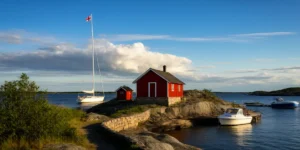 Island Hopping in the Helsinki ArchipelagoIsland Hopping in the Helsinki Archipelago: Your Ultimate Nordic City Break You step off a ferry and within eight minutes you’re standing… Read more: Island Hopping in the Helsinki Archipelago
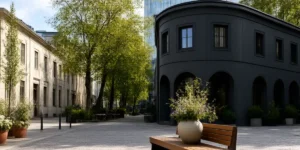 Helsinki’s Design DistrictHelsinki’s Design District: A Nordic City Break for Australian Travellers While we’re sweating through another 38-degree day in Sydney or swatting mozzies… Read more: Helsinki’s Design District